Music helps, they said.
74.5%
of 728 people who answered said music improves their mental health. 169 noticed no effect and 17 said it makes things worse.
Heavy listeners hurt more.
Add up anxiety, depression, insomnia and OCD, each self-scored from 0 to 10. The total climbs with every band of daily listening. The best model, age plus log of hours, says the effect fades as hours grow, and it can't say which way it runs: people who struggle may simply reach for music more.
14.8
19.6
0–1 h 14.8
2–3 h 16.6
4–6 h 18.2
7+ h 19.6
Sleep goes with it.
Insomnia scores rise from 3.2 among people who listen an hour a day or less to 4.6 among those who listen seven or more. Depression follows the same climb, from 4.2 to 5.5.
The survey
An open Google Form shared on Reddit, Discord and in print, with no limit on age or place. Every answer, and every score, is self-reported.
- 736
- responses, 33 questions each
- Aug–Nov 2022
- when the answers came in
- 16 genres
- to pick a favourite from
- Ages 10–89
- median age 21
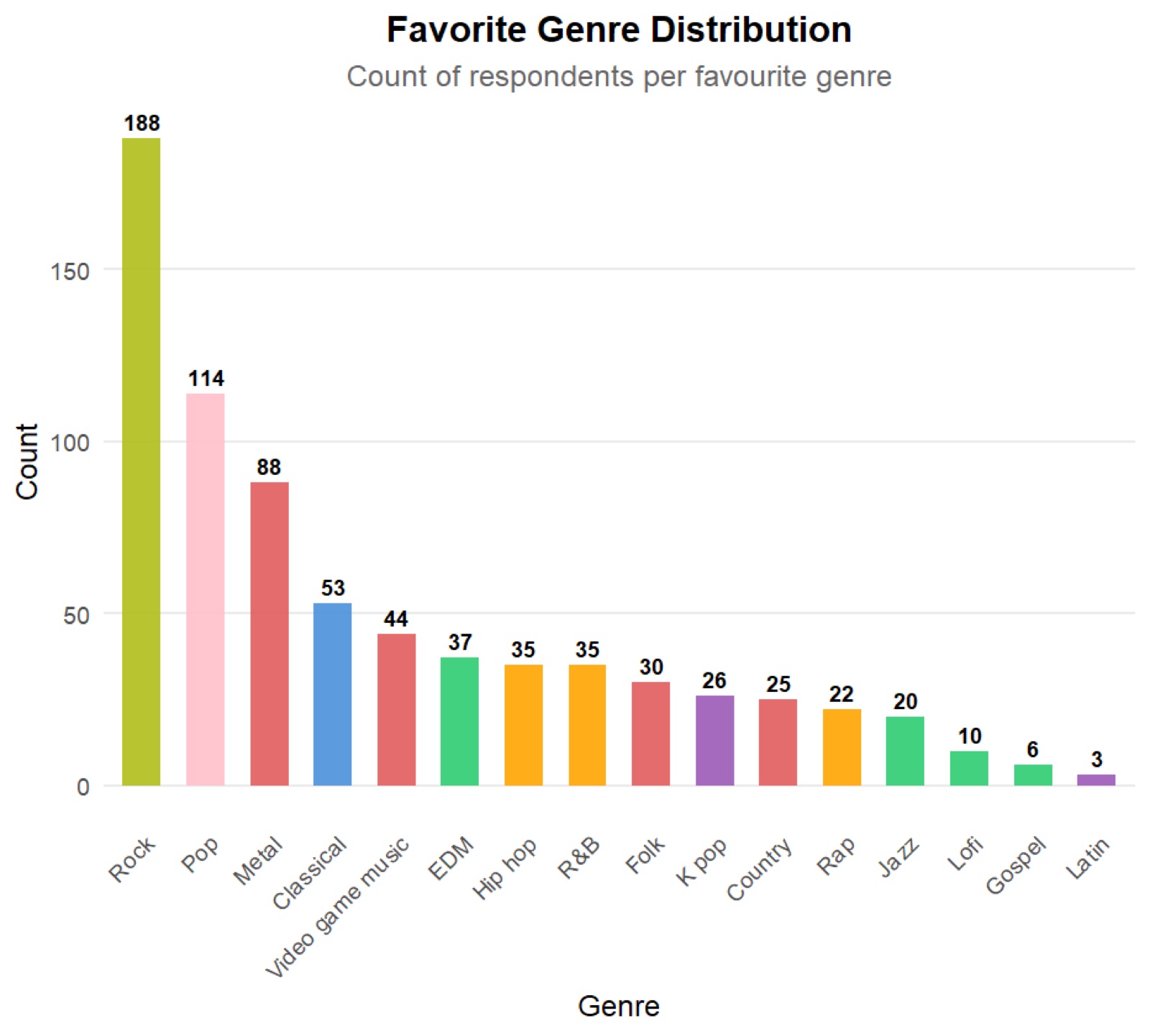
Pick your genre.
See how the people who share your favourite answered. Averages, not diagnoses, and small groups swing.
How we tested it.
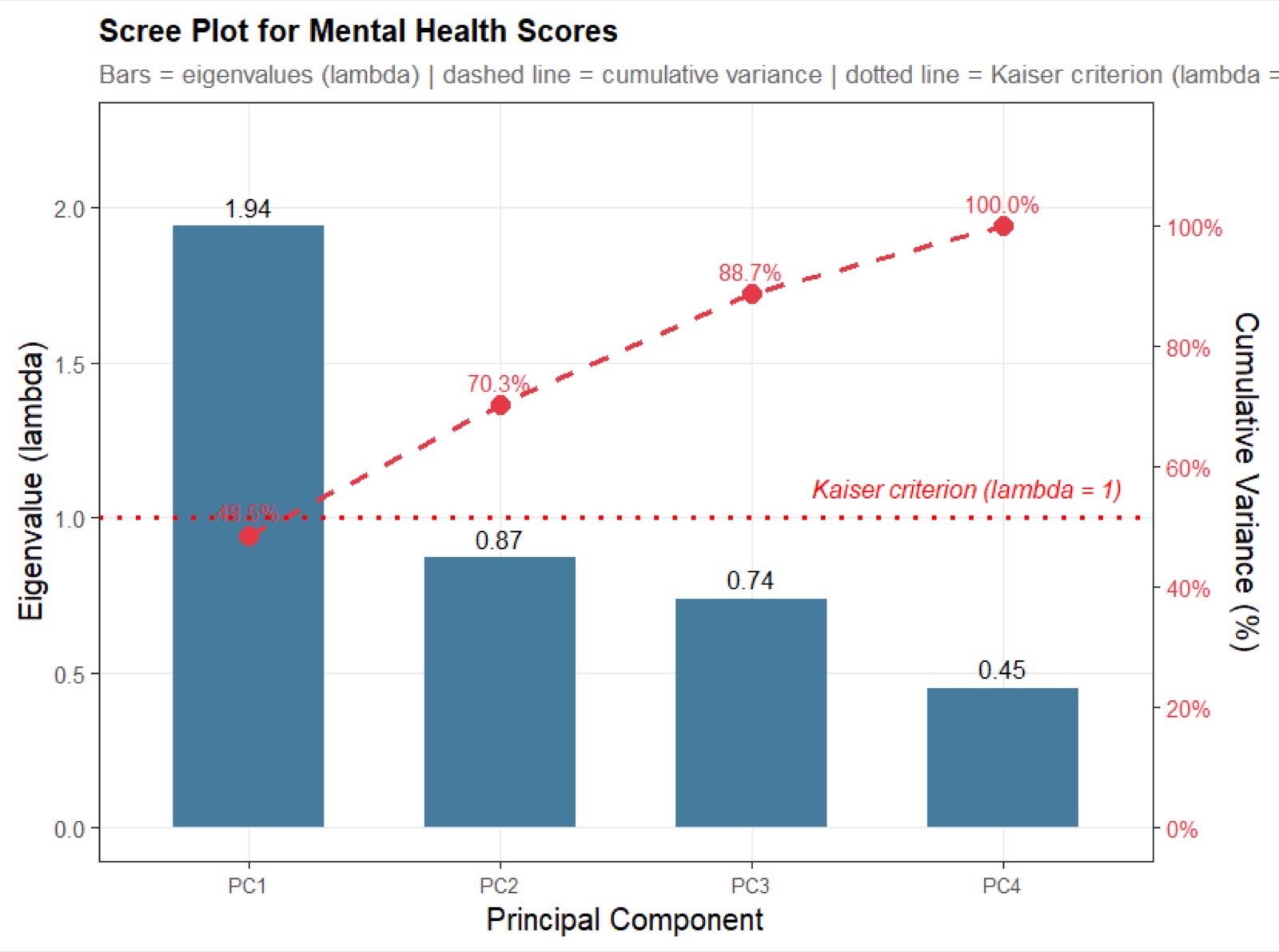
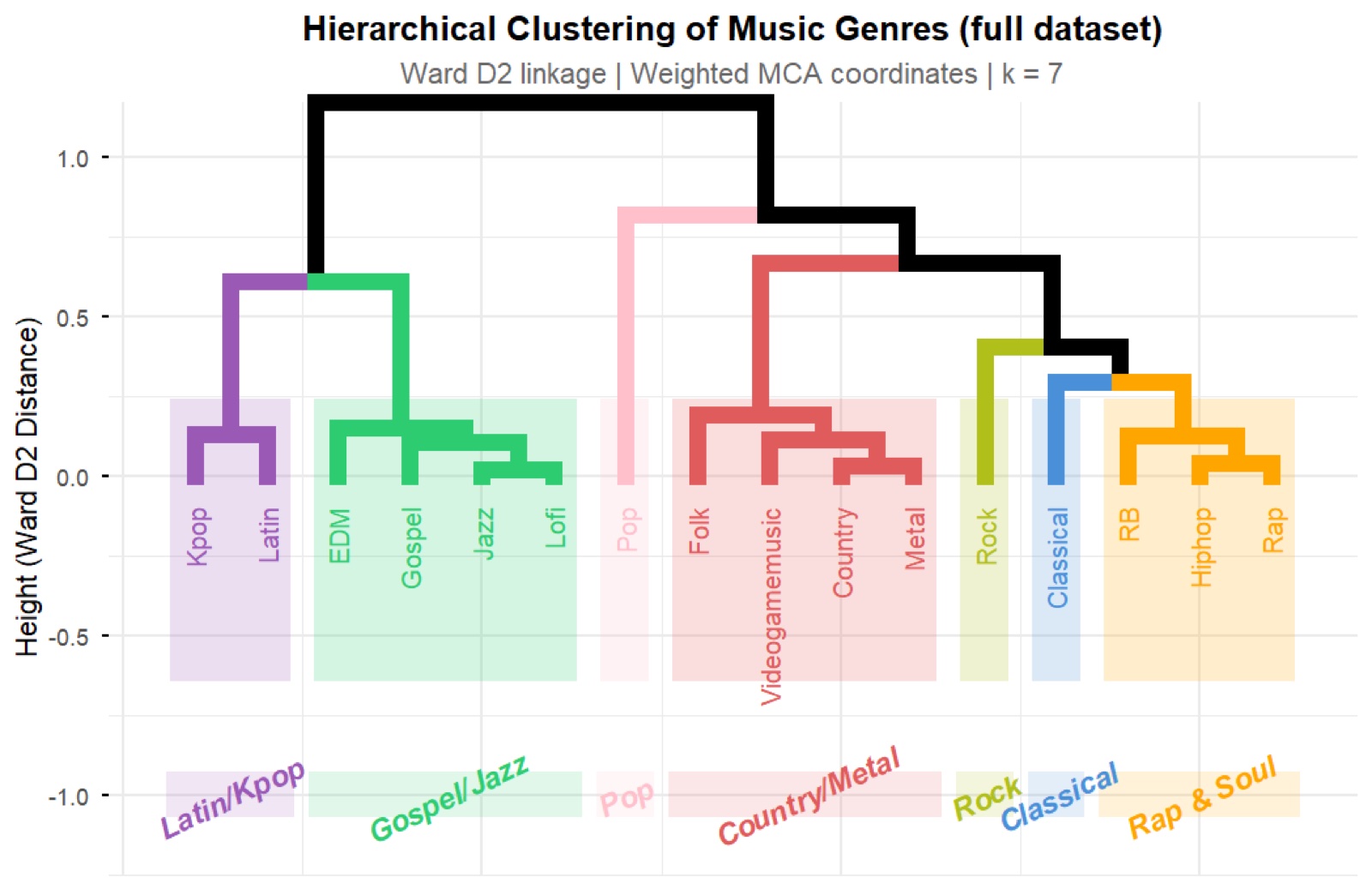
Four symptom scores and sixteen genre frequencies are too many moving parts for one regression, so we compressed both, then fit simple and multivariate models with errors that tolerate uneven variance.
Prepare
Split the answers 30 / 70219 · 517
Keep the study variables8
Compress
PCA on the four conditionsPC1 50.0%
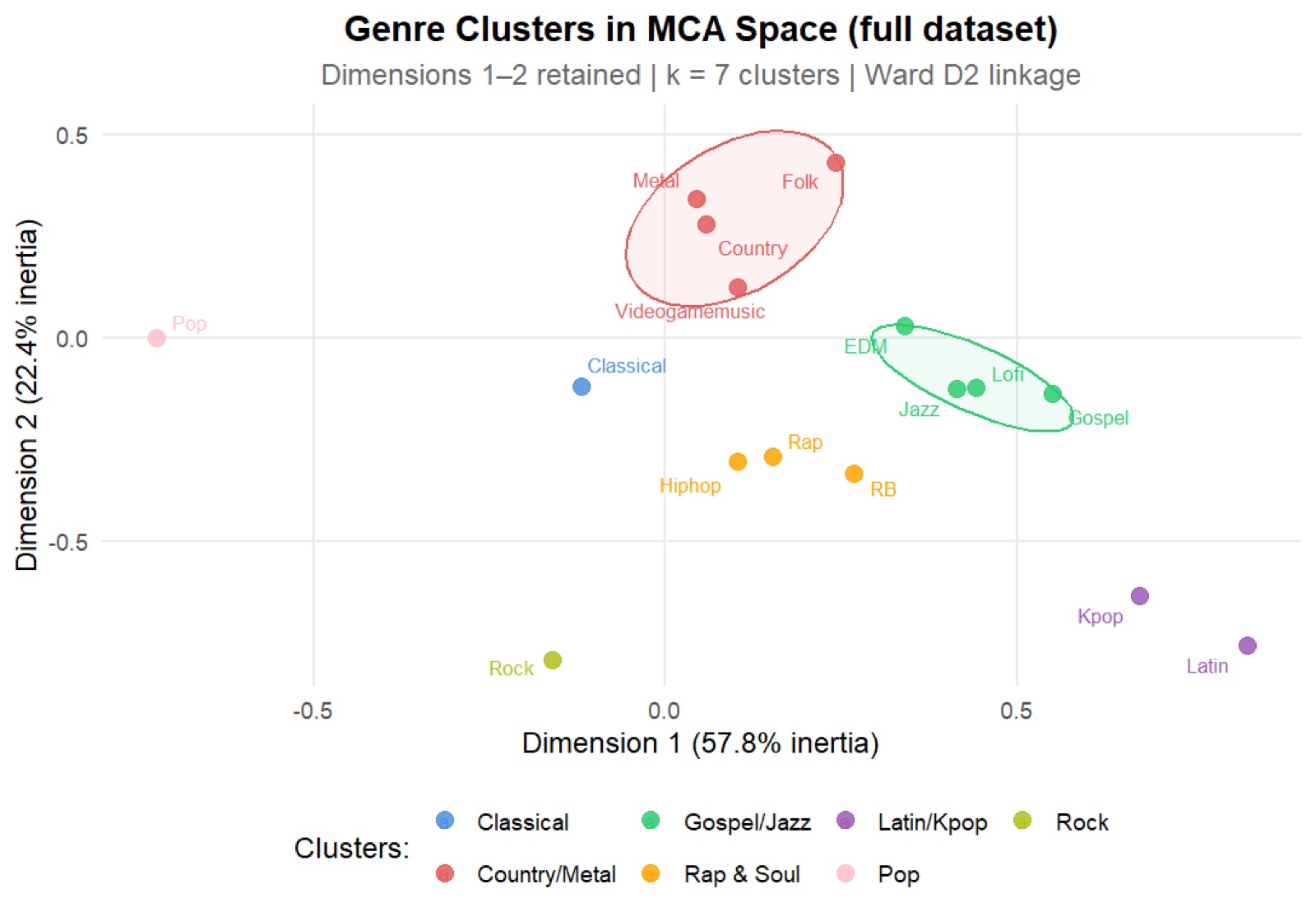
MCA, then cluster the genresk = 5
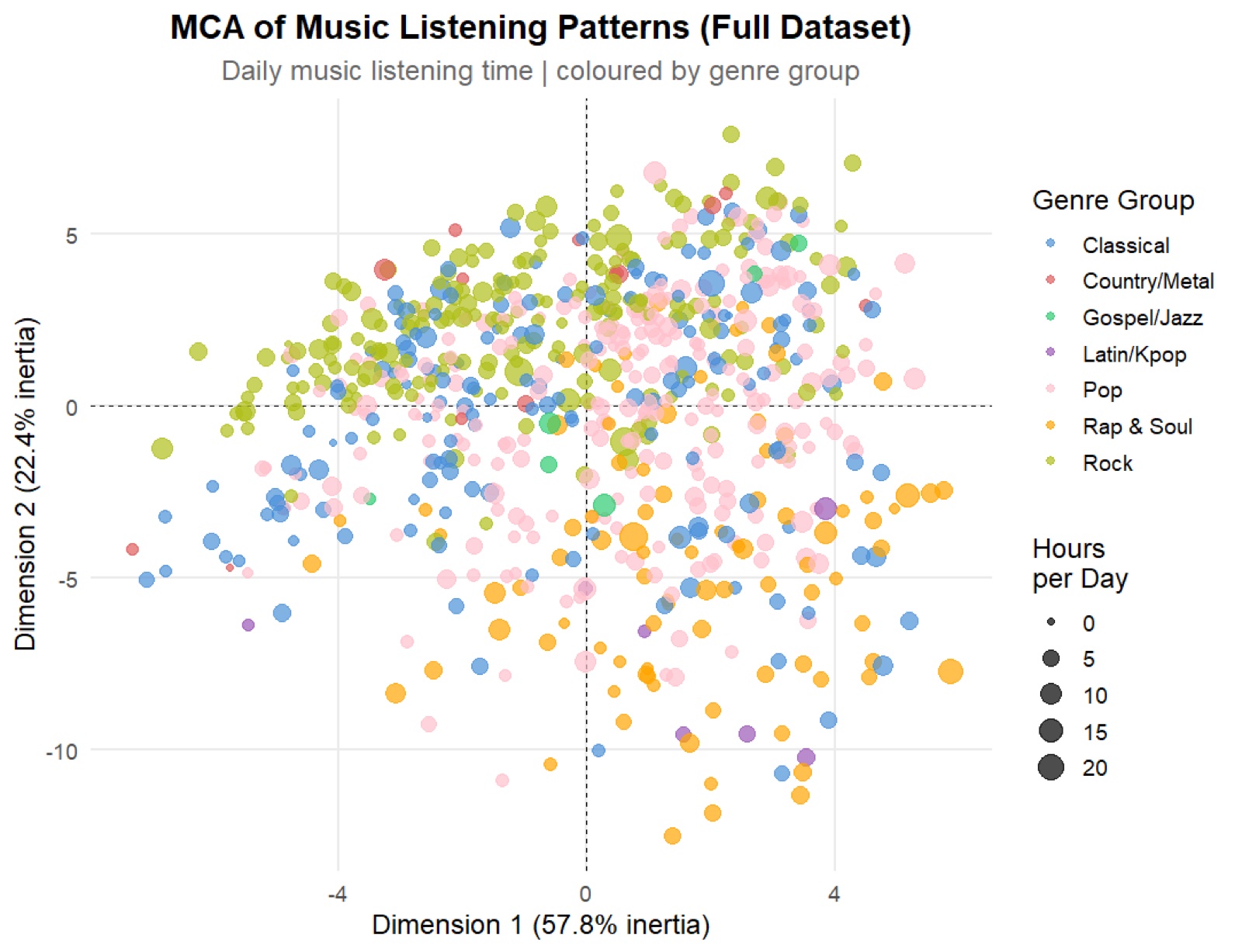
Post-hoc joint MCA, silhouettek = 7
Model
OLS, robust HC3 errorsBreusch-Pagan
Best fit: age + log(hours)adj. R² 0.056
Hours and age matter; genre and tempo don'tp < 0.0001
From the notebook
Who asked
Hope Tadsen, Kala Fejzo, Emmanuel Damas and Shola Able-Thomas ran this study for MIDS 203 at UC Berkeley's School of Information in April 2026, using the public MxMH survey. It finds an association, not a cause: the answers are self-reported, the sample chose itself online, and one snapshot can't show whether listening changes mood or mood changes listening. Genre and tempo explained almost nothing once age and hours were in the model. For streaming platforms the useful lesson is care, not claims: heavy listening may be a sign someone is coping, and recommendations could respond to that without promising a cure. Read the full report.